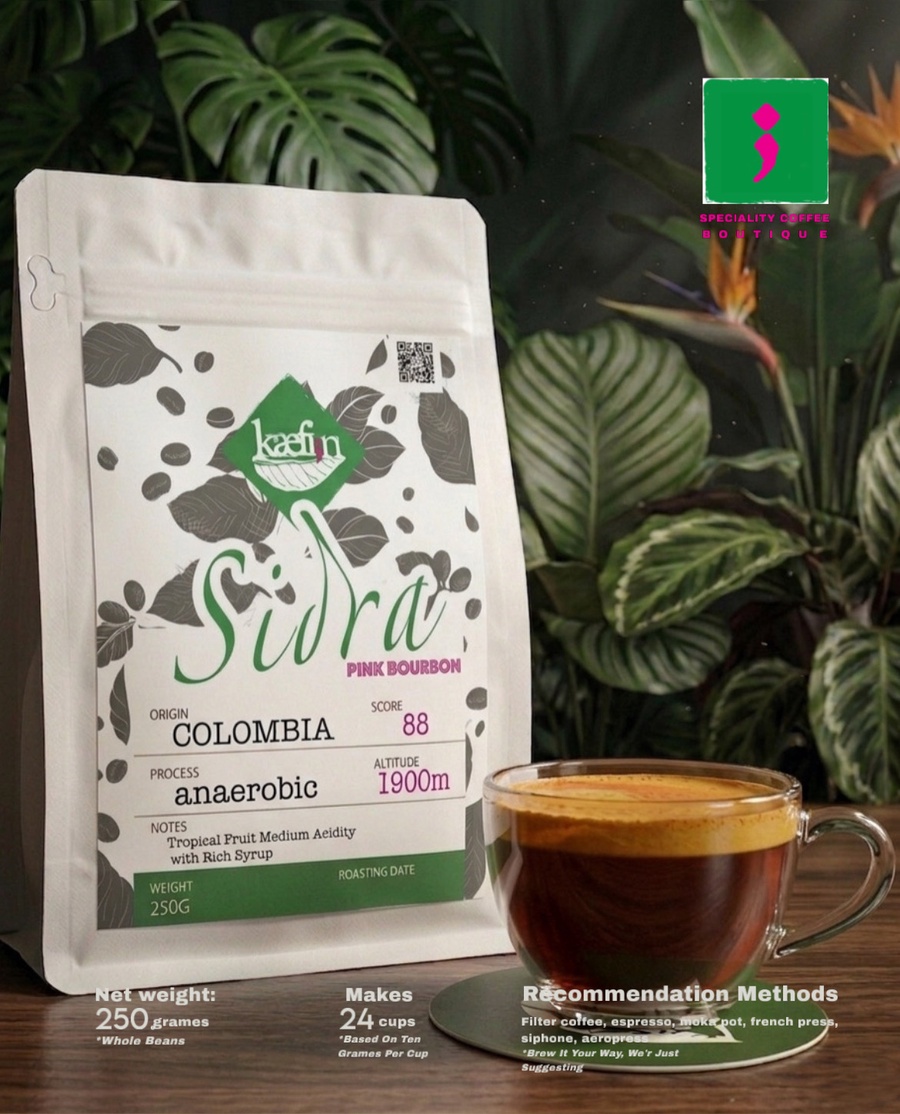
Sidra, Colombia – Pink Bourbon – Anaerobic – Single Origin Specialty Coffee – 100% arabica Whole Bean – 250g
(1 Rate)
1355EGP
*English Description Below
في أعالي منطقة هوايلا الكولومبية، حيث الارتفاع يتجاوز ١٩٠٠ متر ودرجات الحرارة الباردة تبطئ نضج الحبوب، يزرع صغار المزارعين أحد أكثر أصناف البن تميزاً في العالم: سيدرا. هذا الصنف النادر، والذي يُعتقد أنه إما هجين طبيعي يجمع بين جينات بوربون الكلاسيكية وتابيكا، وهي سلالة إثيوبية نقية، مما يمنحه طيفاً نكهياً يمتد من الفواكه الاستوائية إلى الكراميل الحار.
تفرد الحبة:
تتميز سيدرا المعالجة لاهوائياً بنكهاتها الجريئة والمعقدة. تفتتح الكأس بفاكهة داكنة تشبه الكرز الأسود والخوخ المجفف. تتوسطها حموضة متوسطة، نظيفة، تشبه التفاح الأخضر والفواكه الاستوائية كالأناناس والمانجو. تنتهي القهوة بملاحظات الشوكولاتة الداكنة واليانسون، مع لمسة دافئة من الكراميل والقرفة. جسم القهوة متوسط إلى كثيف، ناعم إلى حريري، ونهايتها طويلة، نظيفة، مع بقايا نكهة حارة حلوة.
طريقة المعالجة:
تعتمد هذه القهوة على معالجة لاهوائية مبتكرة. تُقطف الكرزات الحمراء الناضجة يدوياً وتُفرز بدقة لقياس مستوى السكريات (٢١-٢٤ بريكس) لضمان جودة التخمير. توضع الكرزات بعد ذلك في خزانات محكمة الإغلاق خالية من الأكسجين، تُترك لمدة ٧٢ ساعة في بيئة باردة. خلال هذه الفترة، تنشط الخمائر الطبيعية الموجودة على الكرزات (أو المُضافة) لتحويل السكريات إلى أحماض عضوية معقدة، مما ينتج نكهات فاكهية حادة وغنية دون أي مرارة. بعد التخمير، تُزال القشرة الخارجية وتُغسل الحبوب بالماء النقي، ثم تُنشر على أسرّة مرتفعة لتجف في الشمس لمدة تتراوح بين ١٢ و ٢٠ يوماً.
التحميص الأسبوعي بكميات صغيرة:
نحمص هذه الحبوب، بكميات صغيرة لا تتجاوز ١٠ كيلوغرامات، باستخدام تقنية الهواء الساخن بدرجة تحميص خفيفة إلى متوسطة (Light to Medium)، وهي الدرجة الأنسب لإبراز الحموضة اللاهوائية المعقدة والفواكه دون أن تحجب التعقيد الطبيعي للحبة. ثم تعبئ في اكياس المونيوم بصمام تفريغ الهواء لتصل إليك حبوب القهوة طازجة وفي ذروة عطرها .
تكفي لتحضير ١٧ إلى ٢٥ كوباً.
نصيحة التحضير:
- للتقطير اليدوي (V60):
- طحن متوسط (مثلاً ١٦ نقرة على طاحونة كوماندانتي)، درجة حرارة ماء ٩٢-٩٤ درجة مئوية، نسبة تخمير ١:١٦ (١٦ غرام بن لكل ٢٥٠ مل ماء).
- للإسبريسو:
- طحن ناعم، درجة حرارة ٩٣ درجة مئوية، نسبة ١:٢ (١٨ غرام بن، ٣٦ غرام إسبريسو). نتوقع قشدة كثيفة مع نكهات الفواكه الداكنة والشوكولاتة واليانسون.
ملاحظة: قهوة السيدرا مناسبة لمحبي القهوة المعقدة، حيث تقدم توازناً فريداً بين الحلاوة والحموضة الواضحة مع جسم حريري كثيف. قد تكون تجربة مميزة لمن يحبون استكشاف الأصناف النادرة في القهوة المختصة.
لمحة تاريخية عن قهوة سيدرا (Sidra):
نشأت قهوة سيدرا كنوع من التجارب العلمية، حيث يُعتقد أن أصلها يعود إلى مختبر لشركة نستله في مقاطعة بيتشينشا (Pichincha) بدولة الإكوادور في تسعينيات القرن الماضي. كان الهدف من البحث هو تطوير سلالة هجينة من البن تجمع بين الجينات الإثيوبية وبوربون لتحسين جودة الفنجان ومقاومة الأمراض. يذكر أن الفني الميداني "دون أولقر روجيل" (Don Olger Rogel) لعب دوراً محورياً في توزيع هذه السلالة على المزارع [5†L21-L24].
شهدت سيدرا تحولاً كبيراً في هويتها الوراثية، حيث أشارت الفحوصات الأولى إلى أنها هجين طبيعي بين تيبيكا (Typica) وبوربون (Bourbon)، بينما كشفت الفحوصات الجينية اللاحقة أنها قد تكون في الواقع سلالة إثيوبية نقية (Ethiopian Landrace) [1†L12-L14][6†L18-L19]، مما يجعلها نوعاً فريداً لا يمكن تصنيفه بسهولة.
انتقلت السلالة من الإكوادور إلى الأراضي الكولومبية في عام 2012، وذلك عندما قامت مزرعة "لا بالمًا إل توكان" (La Palma y El Tucán) في منطقة كونداماركا (Cundinamarca) بزراعة حوالي 1,800 شتلة منها تجارياً، ومن ثم تمت إضافة أكثر من 4,000 شتلة أخرى في عام 2015 ليصل العدد إلى 6,100 شتلة. كما كانت مزرعة "لا بريمافيرا" (La Primavera) في كولومبيا من أوائل المزارع التي أدخلت السلالة أيضاً [9†L18-L19]، لتُصبح كولومبيا موطناً جديداً لهذه السلالة النادرة التي تشتهر بها منطقة هوايلا اليوم.
ساعد الاستخدام في مسابقات القهوة العالمية على تعزيز مكانة سيدرا الأسطورية، حيث كانت جزءاً من الروتين الفائز لبطل العالم للبارستا لعام 2019 "جويون جيون" (Jooyeon Jeon) في بوسطن، وكذلك للبطل في عام 2022 "أنتوني دوغلاس" (Anthony Douglas). اليوم، وبعد ما يقرب من عقد من التجارب والاختبارات الميدانية التي أثبتت كفاءتها من حيث المذاق والمقاومة للأمراض والتغيرات المناخية، انتشرت زراعة سيدرا على نطاق واسع لتبلغ مساحات زراعتها الآن أكثر من 10,000 هكتار في كل من الإكوادور وكولومبيا.
Description:
In the highlands of Colombia's Huila region, at altitudes exceeding 1,900 meters where cool temperatures slow bean maturation, smallholder farmers cultivate one of the world's most distinctive coffee varieties: Sidra. This rare variety, believed to be either a natural hybrid combining classic Bourbon and Typica genetics or a pure Ethiopian Landrace, offers a flavor spectrum ranging from tropical fruits to spiced caramel.
Unique Bean Profile:
Anaerobic-processed Sidra is characterized by its bold and complex flavors. The cup opens with dark fruit notes reminiscent of black cherry and dried plum. A medium, clean acidity reminiscent of green apple and tropical fruits like pineapple and mango runs through the cup. The coffee finishes with notes of dark chocolate and anise, with a warm touch of caramel and cinnamon. The body is medium to full, smooth to silky, with a long, clean finish and a lingering sweet spicy aftertaste.
Processing Method:
This coffee relies on an innovative anaerobic processing method. Ripe red cherries are hand-picked and meticulously sorted, with sugar levels measured (21-24° Brix) to ensure fermentation quality. The cherries are then placed in sealed, oxygen-free tanks and left for 72 hours in a cool environment. During this period, natural (or added) yeasts present on the cherries become active, converting sugars into complex organic acids, resulting in pronounced, rich fruity flavors without any bitterness. After fermentation, the outer skin is removed, and the beans are thoroughly washed with pure water, then spread on raised beds to dry in the sun for 12 to 20 days.
Weekly Small-Batch Roasting:
We roast these beans in small batches not exceeding 10 kilograms, using hot air technology to a Light to Medium roast degree – the optimal level to highlight the complex anaerobic acidity and fruit notes without masking the bean's natural complexity. Order today, we roast tomorrow, and the coffee arrives fresh.
Enough for 17 to 25 cups.
Brewing Tip:
- For Pour-Over (V60): Medium grind (e.g., 16 clicks on a Comandante), water temperature 92-94°C, brewing ratio 1:16 (16g coffee per 250ml water).
- For Espresso: Fine grind, temperature 93°C, ratio 1:2 (18g coffee, 36g espresso). Expect a thick crema with dark fruit, chocolate, and anise notes.
Note: Sidra coffee is ideal for those who appreciate complex coffees, offering a unique balance of sweetness and bright acidity with a silky, full body. It is a distinctive experience for those who enjoy exploring rare specialty coffee varieties.
A Historical Overview of Sidra Coffee (Sidra): Sidra coffee originated as a form of scientific experimentation, believed to have been developed at a Nestlé research laboratory in the Pichincha province of Ecuador during the 1990s. The breeding program aimed to develop a hybrid combining Ethiopian genetics with Bourbon to improve cup quality and disease resistance. A field technician named Don Olger Rogel is reported to have played a key role in distributing this variety to farms.
Sidra underwent a major shift in its identity, transitioning from being viewed as a Typica-Bourbon hybrid to being reclassified as an Ethiopian Landrace variety after genetic testing, making it a unique type that is not easily categorised.
The variety was introduced to Colombia in 2012, when Finca La Palma y El Tucán in Cundinamarca became one of the first farms to commercially plant around 1,800 seedlings, followed by an additional 4,000 in 2015. Finca La Primavera was also among the early adopters of the variety, and over the next decade, Sidra spread throughout the Huila region.
A major factor in Sidra's legendary status is its success in global coffee competitions. It was part of the winning routine of the 2019 World Barista Champion, Jooyeon Jeon, and the 2022 champion, Anthony Douglas. Following nearly a decade of field tests proving its quality and resilience, Sidra is now cultivated on over 10,000 hectares across Ecuador and Colombia.